2025 Asia Working Groups Small Grants to Advance Inclusive Peacebuilding Across Asia
From June–December 2025, the Peacemakers Network’s Asia Working Group (AWG), with support from the Ministry for Foreign Affairs of Finland, funded four grassroots initiatives to advance inclusive peacebuilding across Asia. The small grants back locally led efforts that strengthen mediators and peacebuilders from underrepresented groups: (1) women and young women of faith, (2) persons with disabilities, and (3) LGBTQI+ individuals and communities. These grants address persistent gaps in representation and participation by equipping community leaders with tools, visibility, and networks to influence dialogue, mediation, and local peace processes.
Digital 4 Peace: Empowering Persons with Disabilities from Exclusion to Influence in Thailand’s Deep South
The Peace Ability project organized a transformative September 2025 workshop at Prince of Songkla University’s Pattani Campus, addressing the exclusion of Persons with Disabilities (PWDs) from peace and development decision-making in Thailand’s Southern Border Provinces. 45 attendees, including 31 PWDs, developed the “Declaration of Persons with Disabilities for Inclusive Peace and Development,” outlining six core demands. This policy document was presented to regional authorities, who made commitments to implementation, such as inviting PWD representatives to advisory councils and pledging to embed disability inclusion in plans and budgets. The project significantly boosted participants’ advocacy confidence and rights awareness, elevated disability issues in local policy, and launched a digital platform for ongoing community-driven accountability. This replicable model for inclusive initiatives was made possible through a coalition of local and international partners.
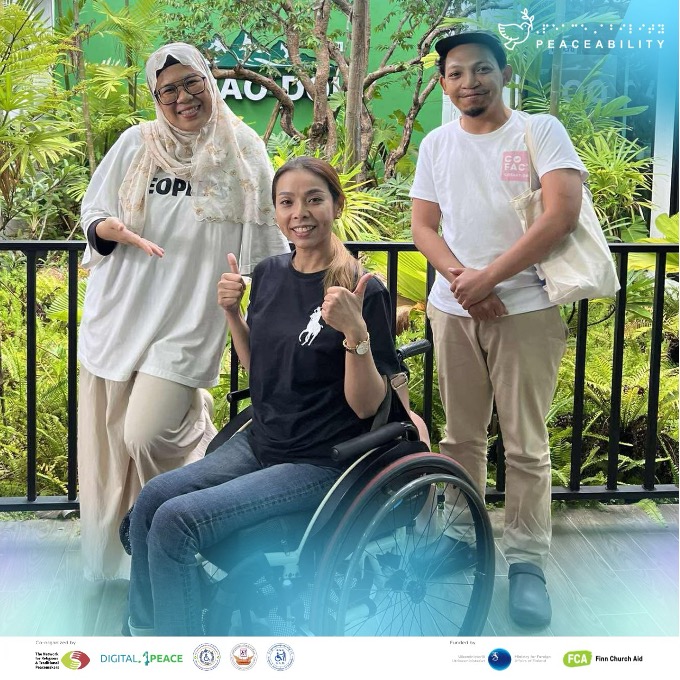
Ms. Apichaya Thaichana (center) and Ms. Ameenoh Arong, (left) Project Team empowered PWDs transforming them from passive recipients of aid into active agents of peacebuilding in three deep south provinces of Thailand in collaboration with Digital 4 Peace by Maruf Chebueraheng (right).
Bangladesh Protibandhi Kallyan Somity (BPKS): Promotion of Peacebuilder Advocates with Disabilities in Grassroots (PADG), Bangladesh
In September 2025, BPKS trained 42 Peacebuilder Advocates with Disabilities (47% women) through a seven-day residential program in Dhaka, building leadership, mediation, and advocacy skills. Trainees adopted a shared Declaration and, with OPD partners, formed eight divisional Peacebuilding Advocacy Teams (56 members total) to drive local dialogue, conflict resolution, and inclusion. A Facebook group and eight divisional WhatsApp groups sustain coordination and reporting, while extensive local media coverage (~30 TV/print outlets) elevated visibility. The PADG model—merit-based selection, intensive training, nationwide and systemic team formation, and digital follow-through—offers a scalable blueprint for disability-inclusive peacebuilding across Bangladesh.
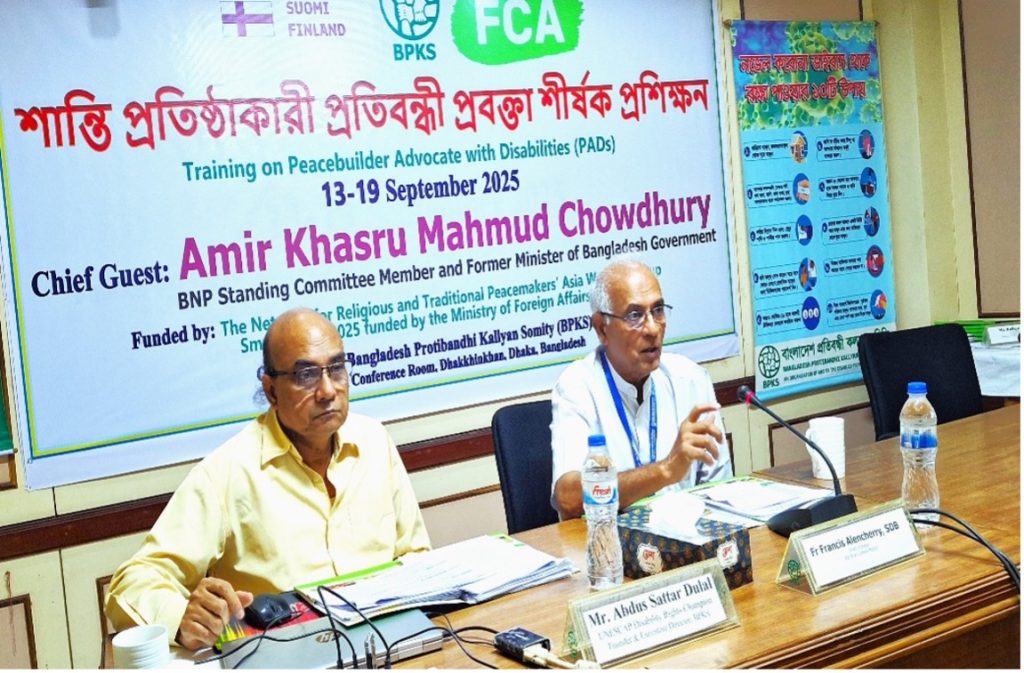
Mr. Abdus Sattar Dulal, CEO of BPKS and World President of DPI and Mr. Amir Khasru Mahmud Chowdhury, BNP Standing Committee addressed Training on PADs on 13-19 September 2025 in Dhaka.
Religion, Culture, and Peace Laboratory (RCP Lab) / Payap University: From the Margins to Empowerment – Building Inclusive Justice & Peace through Storytelling, Dialogue, and Advocacy
From August–October 2025, IRCP ran an 11‑event series that brought women of faith, Buddhist monastics and youth, LGBTQIA+ leaders, and persons with disabilities from storytelling to shared action. The program combined thematic storytelling, interfaith dialogue with a six‑site walking pilgrimage, and skills workshops in mediation and peacebuilding, culminating in a co‑refined, participant‑owned Statement of Principles for teaching, programming, and advocacy. Hosted at Payap University, each session drew between 24–56 participants – reaching an estimated 300 participants. Sessions strengthened cross‑community ties and increased speakers’ and participants’ confidence to apply dialogue and mediation tools. This low‑cost, replicable IRCP model—safe inclusive storytelling, interfaith encounter, practical skills, and a shared framework—offers a clear pathway for inclusive peacebuilding.
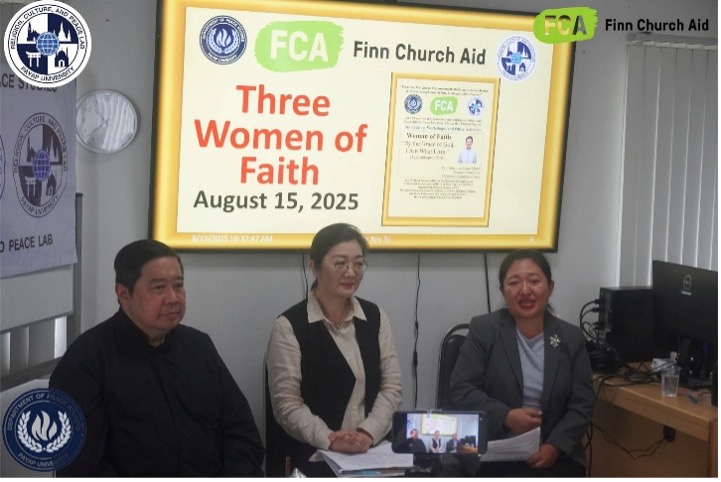
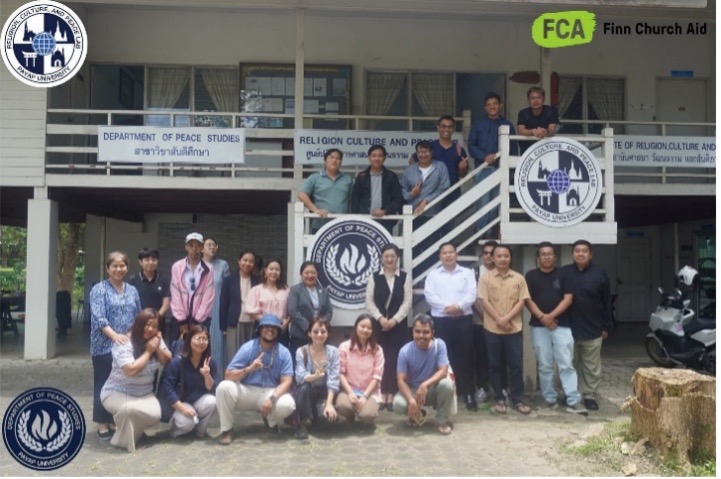
Women of Faith was one of several themes led by Rey Ty, Ph.D. (left) and a project leader of IRCP Lab, Payap University in Chiang Mai, Thailand during August-October 2026.
Organization for the Women and Disable Care (OWDC): Strengthening Inclusive Peacebuilding through Local Leadership in Multan, Pakistan
From July – December 2025, OWDC advanced inclusive, locally led peacebuilding across five Union Councils in Multan. The project trained 400 grassroots actors—women and young women of faith, youth, persons with disabilities, religious minorities, and community leaders—in inclusive dialogue, conflict sensitivity, basic mediation, and rights-based practice, engaging 542 participants across activities. OWDC established the Multan Alliance for Inclusive Peace & Rights (MAIPR, 25 members) and piloted Union Council–level Civic Alliances for Rights & Peace (CARP) as standing coordination platforms and launched community-led Social Action Projects to address local tensions through dialogue and civic engagement. A sample training showed a 60% average knowledge gain (pre/post), and structured forums strengthened cooperation with Union Council representatives, faith leaders, and the District Civil Society Network. The OWDC model—targeted skills-building, fixed local platforms (MAIPR/CARP), and immediate application through Social Action Projects—offers a practical, low-cost approach to embedding inclusion in community peace processes.
2025 Asia Working Group Country Strategic Workshops: Advancing Member-Led National Strategies
From June–December 2025, the Peacemakers Network’s Asia Working Group (AWG), with support from the Ministry for Foreign Affairs of Finland, supported two member-led country strategic workshops to strengthen national peace ecosystems. These in‑country processes convened members and key stakeholders to analyze conflict dynamics, map ongoing efforts, identify collaboration and funding opportunities, and set practical, shared priorities.Each workshop produced concrete, member-owned outputs—action plans, coordination mechanisms, and next steps—to guide national engagement and inform regional learning. By centering local leadership and context, the workshops translate the Network’s inclusive peacebuilding goals into actionable country strategies and partnerships.
National Council of Churches in Bangladesh (NCCB): Faith in Action – Spiritual Leadership for Peacebuilding & Coexistence
Between September and November 2025 in Dhaka and surrounding areas, NCCB convened a focused country-level process to align faith leaders and grassroots actors around practical, member-led peace priorities. In line with advancing its national strategy in Bangladesh, NCCB brought together clergy, youth, women, and community workers for a three-day workshop (Oct 9–11, CCDB Hope Foundation, Savar) and a multi-faith consultation (Nov 15, The Daily Star). Thirty-seven participants completed training on conflict analysis and resolution using the Conflict-Tree model, explored interfaith perspectives on peace across Buddhist, Hindu, Islamic, and Christian traditions, and mapped local tensions and resources. The consultation introduced a “service-based dialogue” approach, emphasizing concrete cooperation for community welfare, and gathered inputs from imams, priests, monks, pundits, youth, and CSO representatives on priorities, risks, and roles.
The process produced a draft Interfaith Action Plan, a nascent Cooperation Network of grassroots peacemakers, and practical modalities—most notably “courtyard meetings” at neighborhood level—to counter misinformation, surface local concerns, and expand participation beyond formal venues. Participants made personal pledges to model non‑violence and justice, and identified immediate improvements, including ensuring women’s representation on future panels and tailoring youth engagement with appropriate media tools and soft‑skills development. Together, these steps respond to the workshop mandate: convene national actors, conduct conflict and effort mapping, set collaboration and advocacy priorities, and define actionable next steps owned by members and partners, with a pathway to inform broader network learning and future programming.
Institute of Buddhist Management for Happiness and Peace Foundation (IBHAP): Youth-led Storytelling for Peace in the Midst of Climate Crisis – Thailand
In December 2025, IBHAP convened a three-day country strategic workshop in Bangkok to position youth storytelling as a practical tool for peacebuilding amid escalating climate impacts, especially in areas heavily impacted by the climate crisis, such as in Thailand’s Southernmost Districts. Seventeen youth and young adults from across the Asia-Pacific gathered for interactive workshops, dialogues, and site visits hosted at IBHAP, Wat Saket, and Benchakitti Forest Park. Sessions built core competencies in narrative design and multimedia storytelling; examined climate–peace–rights linkages and impacts on vulnerable groups; and explored fundraising for climate action. Case inputs covered ecocide, migration and refugees along the Thailand–Myanmar border, lessons from Bangkok Climate Action Week, and a social enterprise model “from waste to value.” A site visit to Benchakitti showcased urban nature-based solutions and biodiversity restoration as sources for collective “Story of Us” narratives.
The workshop delivered member-led outcomes aligned with the country strategic workshop objectives: it convened stakeholders, surfaced a shared analysis of climate risks and social inequalities, and generated concrete outputs and next steps. Participants produced and presented personal and collective stories (Story of Self/Us), formed a stronger youth network for ongoing collaboration, and reported higher confidence to use storytelling in advocacy, dialogue, and community initiatives. Despite a last-minute venue change due to flooding in the affected area in Thailand’s Deep South, the team adapted the program and completed all core activities in Bangkok. Follow-up includes continued peer collaboration and a planned magazine compiling workshop stories. The initiative was delivered with the Network for Religious and Traditional Peacemakers’ support and in partnership with SEA Y4H, Religions for Peace Thailand, KAICIID Dialogue Centre, and Cerita Caravan.
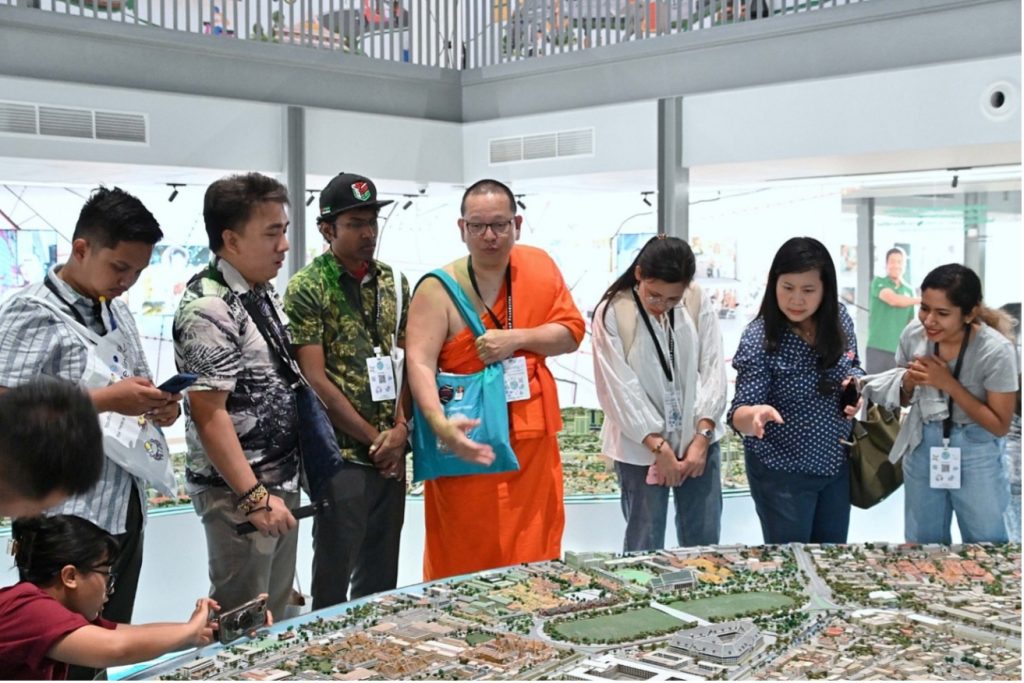
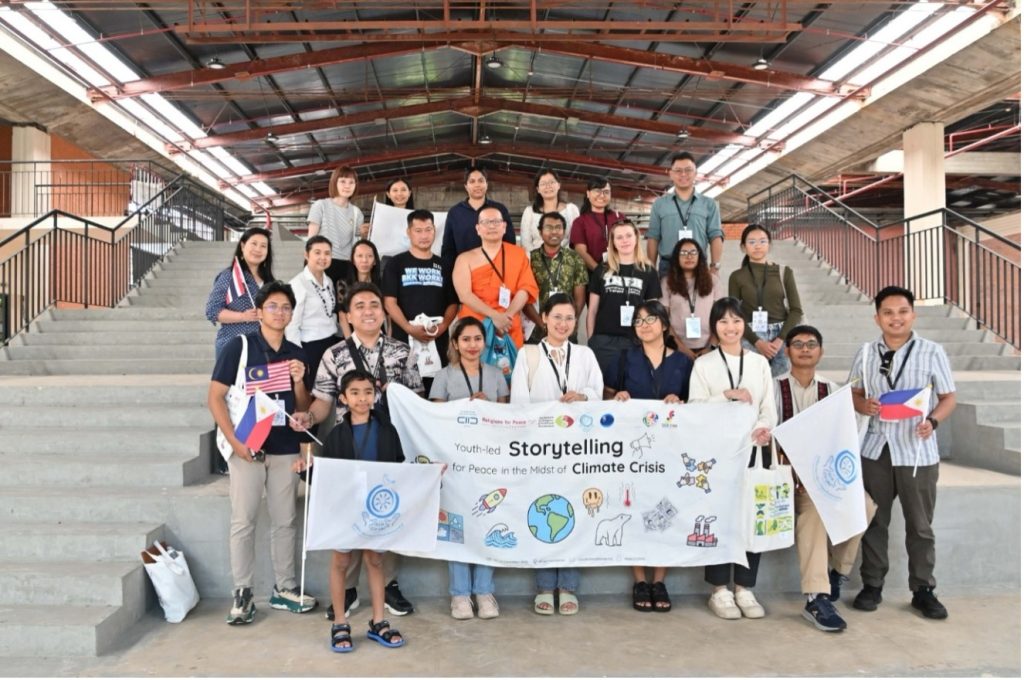
ASEAN youths participated learning and exploring at Benchakitti Forest Park in Bangkok, Thailand, which was a part of “Youth-led Storytelling for Peace in the Midst of Climate Crisis”.
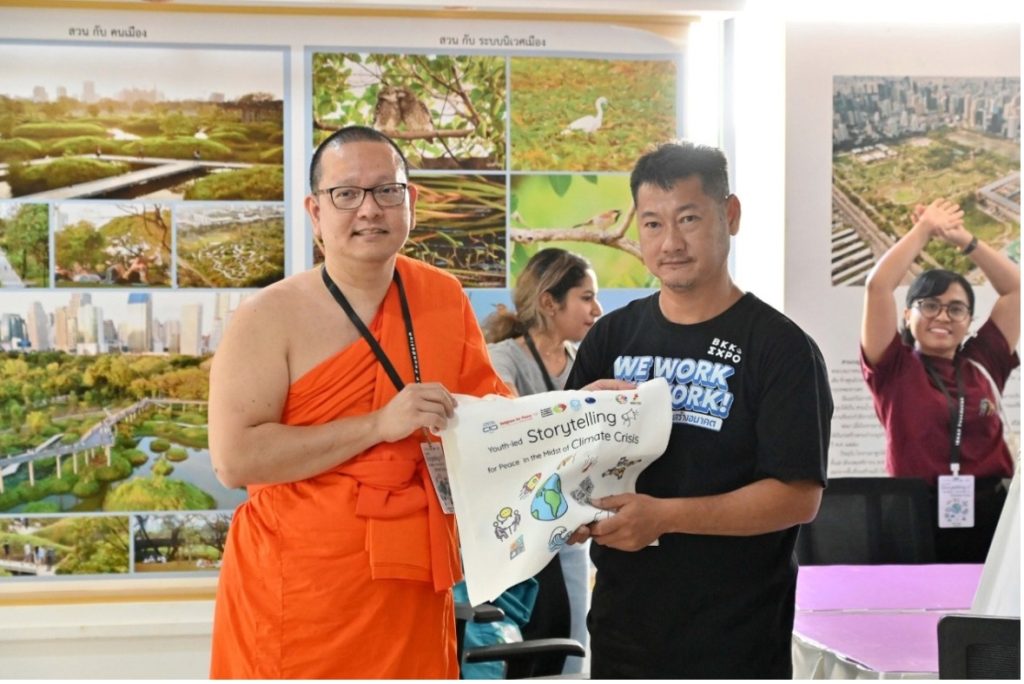
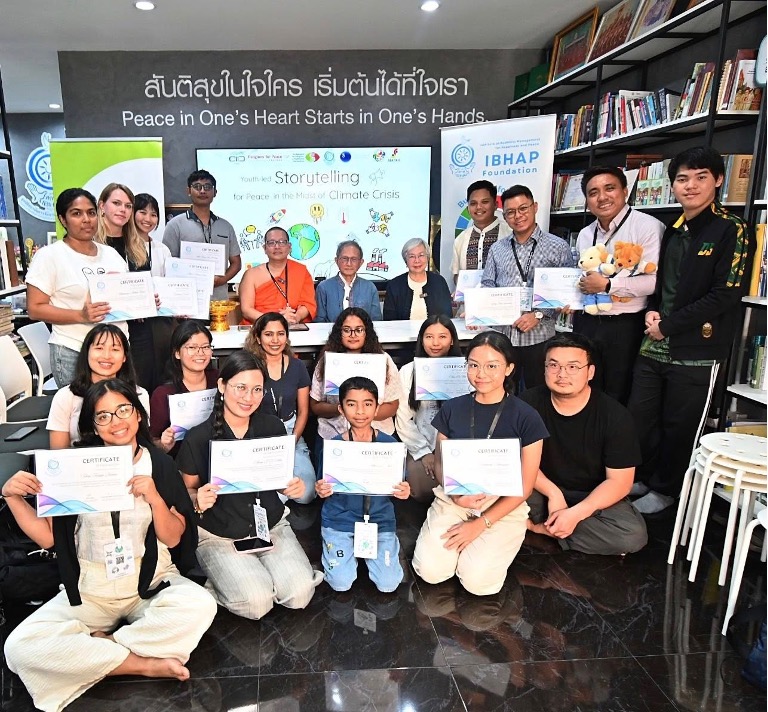
Venerable Napan, Founder of IBHAP thanked to Mr. Em, Head of Conservation, Benchakitti Forest Park for sharing useful details and youths received training certificates for three days workshop.